WINDOW TREATMENT GUIDES | ELEGANT BLINDS & SHADES
“Blinds vs. shades” is one of the most searched window treatment questions there is, and for good reason, the terms get used interchangeably in everyday conversation even though they’re genuinely different products with different strengths. Here’s the actual distinction, straight from how the industry itself defines it, and how to decide which one fits each room in your home.
The Core Difference
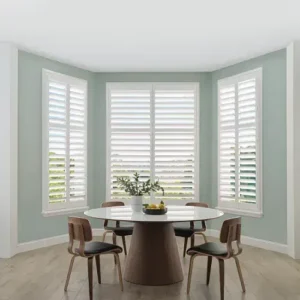
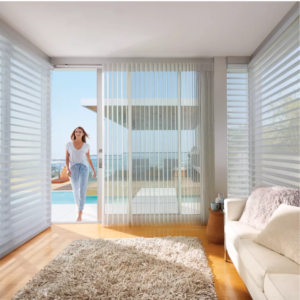
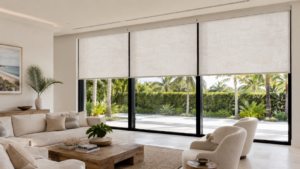
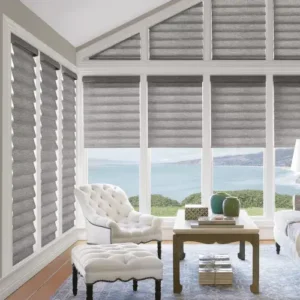
According to Hunter Douglas’s own buyer’s guide, blinds are built from rigid horizontal (or vertical) slats that tilt to control light and can be raised or lowered as a unit. Shades are a single piece of fabric or material that raises and lowers as one panel, some sheer fabric shades can tilt for partial light control, but most work as a simple open-close mechanism rather than the slat-by-slat adjustability of blinds.
Hunter Douglas frames the decision around one core question: how do you want to control privacy and light in this specific room? That’s a more useful starting point than picking a product based on looks alone.
Light Control & Privacy, Compared
Blinds generally win on granular control, tilting slats lets you let light in while still blocking a direct sightline, which is why they’re a common choice for home offices and living rooms. Shades tend to offer stronger, more consistent privacy when closed, but with a simpler range of adjustment, which makes them a common default for bedrooms.
Durability & Maintenance
Per Fixr’s cost and comparison data, blinds- especially wood and faux wood tend to be easier to wipe clean and more resistant to everyday wear, while fabric shades require more careful, sometimes professional cleaning and can be more prone to staining or fading. On the flip side, well-built fabric shades resist the mechanical wear (broken slats, tangled cords) that eventually affects most blinds.
Cost Comparison
Fixr’s data puts a typical 8-window install at $345–$750 for aluminum blinds versus $685–$1,310 for comparable shades, meaning blinds are usually the lower-cost starting point, with cost climbing from there based on material (wood, cellular, motorized) for either category.
Energy Efficiency: Where Cellular Shades Pull Ahead
This is the one category where shades have a clear, independently studied advantage. Oak Ridge National Laboratory (a U.S. Department of Energy lab) found that cellular shades achieved up to 24% heating energy savings compared to standard venetian blinds in field testing, strong enough evidence that Minnesota became the first state to add AERC-certified cellular shades to its official energy-efficiency program guidelines.
Can You Combine Them?
Yes, and it’s one of the more practical layering strategies rather than a purely decorative one: a sheer or solar shade for daytime privacy and glare control, paired with a blind or blackout treatment behind it for full coverage at night. This is especially useful on windows that face the street or get intense afternoon sun, where a single treatment struggles to do both jobs well.
Room-by-Room Recommendations
- Living rooms & home offices, blinds, for the finer light control during the day
- Bedrooms – shades (especially blackout or room-darkening) for stronger, simpler privacy and light blocking
- Kitchens & bathrooms, faux wood blinds or moisture-resistant shades, prioritizing easy cleaning
- Any room where energy performance matters most – cellular shades
Frequently Asked Questions
Which is cheaper, blinds or shades?
Blinds are typically the lower-cost option for a comparable window, though pricing for either category rises with premium materials, cellular construction, or motorization.
Which is better for a bedroom, blinds or shades?
Shades, particularly blackout or room-darkening fabric shades, tend to give more consistent light blocking and privacy for bedrooms without the gaps that can appear between blind slats.
Can I mix blinds and shades in the same home?
Yes, and it’s common – most homes benefit from choosing the treatment that fits each room’s function rather than using one product throughout.
Ready to Start Your Outdoor Living Makeover?
Elegant Blinds & Shades has been fitting South Florida homes with custom blinds, shades, plantation shutters, and drapery for years – including the Hunter Douglas product lines referenced in this article, from cellular and roller shades to motorized systems. Every project starts with a free in-home design consultation, and professionally installed products are backed by a lifetime warranty.
Serving Port St. Lucie, Fort Pierce, Stuart, and Vero Beach and the surrounding Treasure Coast. Call (772) 404-1369 or request a free consultation to find the right window treatments for your home.
Sources
- Hunter Douglas, “Blinds vs. Shades — Which One to Choose?”
- Fixr, “Blinds vs Shades – Pros, Cons, Comparisons and Costs”
- Oak Ridge National Laboratory, “Pulling the Shades for Energy Savings”
- U.S. Department of Energy, “Minnesota Becomes First State to Include Cellular Window Shades” on its efficiency-measure list