OUTDOOR LIVING GUIDES | ELEGANT BLINDS & SHADES
A new pergola, screened patio, or outdoor kitchen is the shell of a backyard makeover, the landscaping is what makes it feel finished. And in South Florida, “best landscaping” isn’t just an aesthetic question; it’s a practical one, shaped by water restrictions, native soil, and a growing season that runs almost year-round.
Here’s how to think about landscaping style once you’ve settled on your shade structure, based on the state’s own Florida-Friendly Landscaping guidance.
Start With Florida-Friendly Landscaping Principles
Before picking a style, it’s worth knowing the framework South Florida Water Management District and the University of Florida’s IFAS Extension actually recommend. Florida-Friendly Landscaping™ is built around nine core principles, and three matter most for a backyard makeover:
- Right Plant, Right Place- group plants by their actual water, light, and wind-tolerance needs rather than by looks alone
- Water Efficiently- design irrigation (or skip it) based on what the plants genuinely need, not a blanket sprinkler schedule
- Protect the Waterfront- keep a maintenance-free buffer zone near canals, lakes, or retention ponds
Following these principles isn’t just good practice in South Florida Water Management District territory, it’s often the difference between a yard that thrives on minimal upkeep and one that fights the climate every season.
Three Landscaping Styles That Work With South Florida Structures
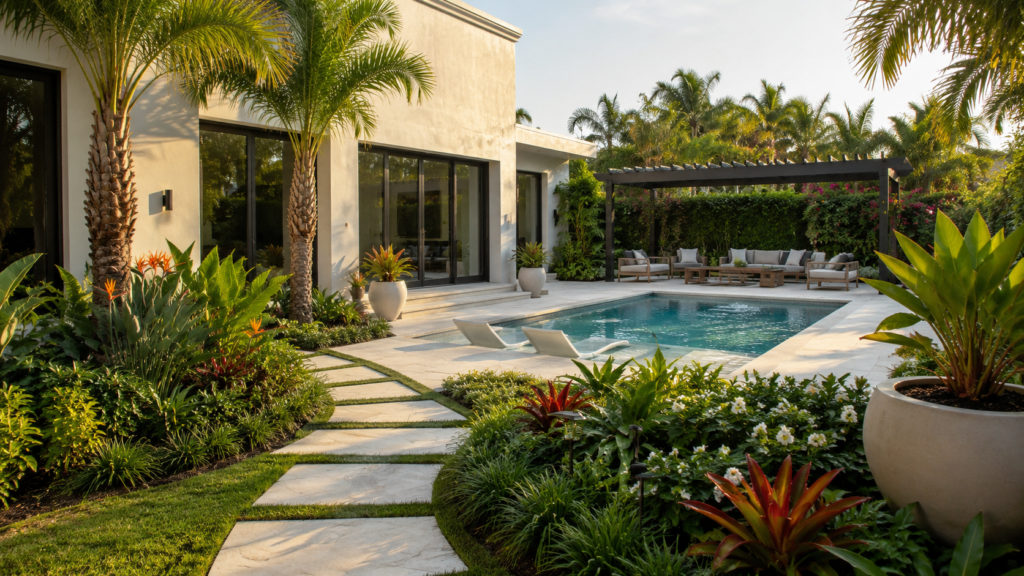
- Lush tropical — native and Florida-adapted palms, philodendron, heliconia, and broadleaf shrubs for a resort-style look. Pairs especially well with a louvered pergola, since dense planting plus adjustable shade creates real microclimate relief in peak summer.
- Native and drought-tolerant —coontie, muhly grass, saw palmetto, and other native species that need little to no supplemental irrigation once established. A strong fit for homeowners who want a lower-maintenance yard and a landscape that meets Florida-Friendly water-efficiency goals by design.
- Modern minimalist poolscape — clean lines, gravel or paver planting beds, and a small number of specimen plants (agave, sculptural palms) rather than dense greenery. Works well around screened patios and outdoor kitchens where you want sightlines kept open.
How Landscaping and Shade Structures Work Together
The order matters more than most homeowners expect. Planning your pergola, screens, or patio cover before finalizing your planting plan lets your landscaper design around real shade lines and rooflines, instead of guessing. Screens also protect furniture and plantings near the patio from wind-blown debris and pollen, which matters most for landscaping planted close to a covered living area.
Hurricane Season Considerations for Your Landscaping
Landscaping decisions near a pergola, patio cover, or screened patio should also account for storm season. Tall, top-heavy trees planted close to a structure can become the biggest risk to it in high wind, while low, dense, wind-resistant natives, sabal palms, cocoplum, and dwarf firebush among them, tend to hold up better and are less likely to drop large limbs onto a roofline.
It’s also worth keeping a clear buffer between mature tree canopies and any screened enclosure, since falling debris is one of the more common causes of screen damage after a storm, regardless of how the screen itself is rated.
Where Elegant Blinds & Shades Fits In
Our Outdoor Living team designs and installs the structural side of your makeover, pergolas, patio covers, screens, and furnishings, and we build every design consultation around how your landscaping plan will interact with it, so the shade lines, sightlines, and hardscape work together instead of being planned in isolation.
Frequently Asked Questions
What exactly is Florida-Friendly Landscaping?
It’s a statewide program developed by the University of Florida’s IFAS Extension and supported by Florida’s water management districts, built around nine principles, from right plant/right place to efficient irrigation, designed to help yards thrive with less water, fertilizer, and maintenance.
Do native or drought-tolerant plants still need an irrigation system?
Most need regular watering only while getting established, typically the first several months, and little to none after that a real advantage over a fully irrigated tropical layout.
Should I landscape before or after installing a pergola or patio cover?
Structure first is generally the better sequence. It lets your landscaper design planting beds and irrigation around real shade lines and rooflines instead of guessing where a future structure might go.
Ready to Start Your Outdoor Living Makeover?
Elegant Blinds & Shades’ Outdoor Living division designs and installs the shade structures, screens, awnings, and outdoor living features behind this article, from Azenco motorized louvered pergolas to MagnaTrack screens and SunPro awnings, furniture, and outdoor kitchen components.
Serving Port St. Lucie, Fort Pierce, Stuart, and Vero Beach and the surrounding Treasure Coast, our team offers free in-home design consultations and installs products backed by manufacturer warranties. Call (772) 404-1369 or request a consultation to start planning your outdoor makeover.
Sources
- South Florida Water Management District, “Florida-Friendly Landscaping™ Guide to Plant Selection & Landscape Design”
- South Florida Water Management District, “Florida-Friendly Landscaping Guiding Principles”
University of Florida News, “Florida-Friendly Landscaping™ Celebrates 30 Years”