OUTDOOR LIVING GUIDES | ELEGANT BLINDS & SHADES
When South Florida homeowners search “should I go solar,” most are picturing rooftop panels, but a huge number are actually asking about something else entirely: solar screens for their lanai, patio, or pergola. It’s an easy mix-up, and an important one to clear up, because the two “solar” products solve completely different problems.
This guide is about the second kind: the mesh sun-control screens that cut glare and heat on a covered patio, and how they compare to the insect, vinyl, and wind screens most South Florida homes already have.
What Solar Screens Actually Do
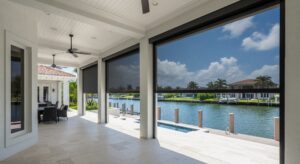
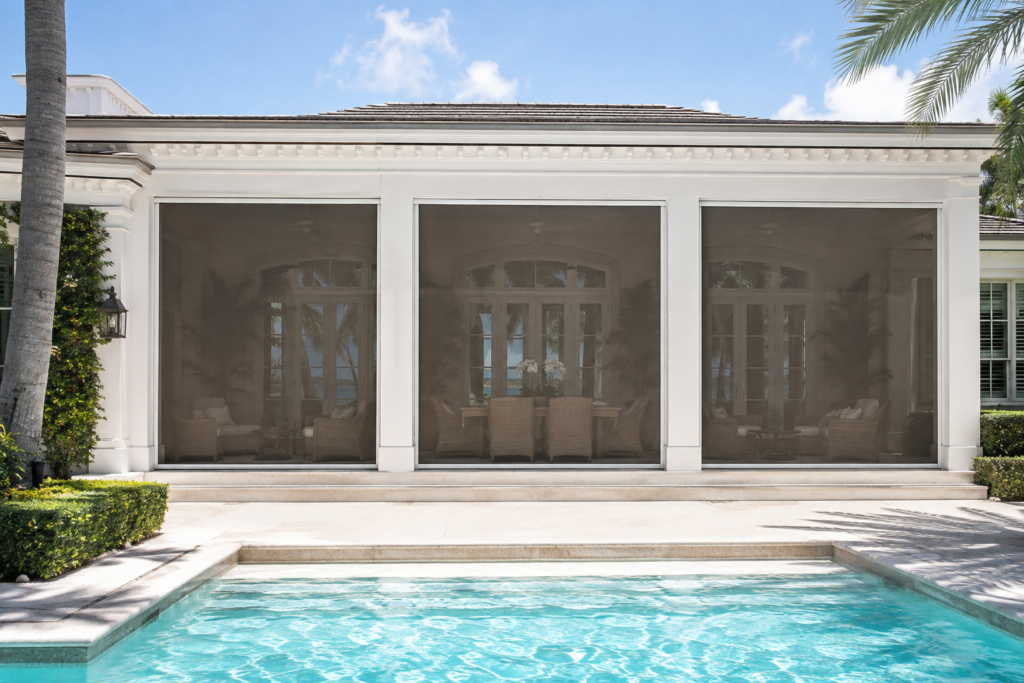
Solar screens are a tightly woven mesh fabric, typically stretched across a track or motorized housing, designed to block a large share of direct sun and glare before it ever reaches your patio furniture, TV, or windows — while still letting you see through them and airflow pass. They’re not the same as blackout shades; the goal is heat and UV control with the view preserved.
Solar Screens vs. Insect, Vinyl, and Wind Screens
Most South Florida screen systems, including the MagnaTrack line we install, come in four main varieties, and they’re not interchangeable:
- Solar screens: built for heat and glare reduction on sun-exposed patios and windows
- Insect screens: standard fine mesh focused on keeping bugs out, with only modest sun-blocking effect
- Vinyl screens: a clear, heavier-duty barrier used to close in a patio against wind-driven rain while keeping the view open
- Wind screens: heavy-duty mesh rated to handle higher wind exposure, often used on more open or elevated patios
Many homeowners end up combining two types, solar screens on the sides that take direct afternoon sun, and standard insect screens elsewhere, rather than using one screen type for the whole patio.
The Energy Savings Case
This is where solar screens earn their name. The U.S. Department of Energy’s Building America Solution Center notes that exterior sun-control screens can reduce solar heat gain by a wide margin compared to an unscreened window or opening, and DOE field studies on high-efficiency exterior shading more broadly have documented summertime cooling savings in the 15–25% range when used consistently through the cooling season.
That range will vary based on your home’s orientation, existing shade, and how much of the exposed glass or screened area you cover, but the underlying mechanism is straightforward: less direct solar heat reaching your patio and windows means your air conditioning runs less to compensate.
The Storm-Season Bonus
Solar and wind screens do double duty during hurricane season. A properly rated wind screen adds a layer of debris and wind-load resistance to an open patio, which is worth factoring in if your outdoor living space isn’t already protected by a hurricane-rated structure.
Where to Actually Use Solar Screens
Not every side of a patio needs the same screen. West- and south-facing exposures typically take the most direct afternoon sun in South Florida and see the biggest comfort and glare difference from solar mesh. North- and east-facing sides, or sections already shaded by a roofline or louvered pergola, often do fine with standard insect screening at a lower cost.
Pool cages and lanais with large expanses of screen are usually the best return on solar screening, simply because there’s more exposed area for the mesh to affect. A design consultation can map out which sides of your specific patio are worth upgrading.
So, Should You Go Solar?
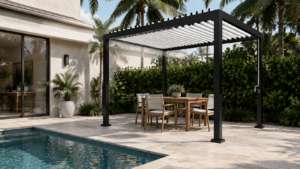
If your patio faces west or south and gets hit with direct afternoon sun, solar screens are usually worth it on their own. If you’re already planning a louvered pergola or patio cover, pairing it with solar screens on the exposed sides gives you the most complete year-round comfort- full shade control from the structure, plus glare and heat control from the screens.
Frequently Asked Questions
Do solar screens block the view from inside?
No- that’s the main thing that separates them from blackout or privacy screens. Solar mesh is woven to cut glare and heat while still letting you see through it in both directions.
Can solar screens be motorized?
Yes. Motorized solar screen systems can run on the same remote or smart-home control as a motorized pergola, so the whole patio can be adjusted together.
Will solar or standard screens hold up in a storm?
Standard solar and insect screens aren’t rated for storm-level wind and debris. If that’s the concern, a wind-rated screen- a separate, heavier-duty product- or a hurricane-rated structure is the right layer to add.
Ready to Start Your Outdoor Living Makeover?
Elegant Blinds & Shades’ Outdoor Living division designs and installs the shade structures, screens, awnings, and outdoor living features behind this article, from Azenco motorized louvered pergolas to MagnaTrack screens and SunPro awnings, furniture, and outdoor kitchen components.
Serving Port St. Lucie, Fort Pierce, Stuart, and Vero Beach and the surrounding Treasure Coast, our team offers free in-home design consultations and installs products backed by manufacturer warranties. Call (772) 404-1369 or request a consultation to start planning your outdoor makeover.
Sources